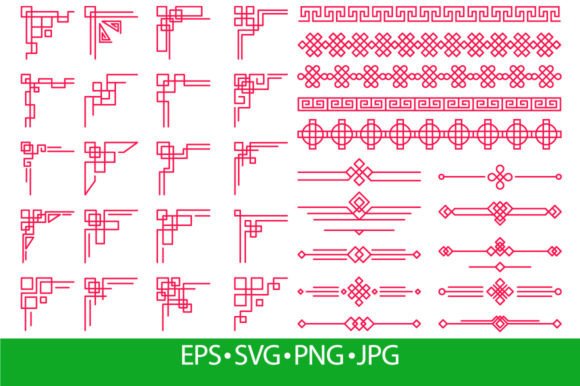
★★★★☆4.6(55 reviews)
Traditional Chinese Oriental Decorative Graphics for Branding & Packaging
Evaluating the Aesthetic and Cultural Resonance of Traditional Chinese Oriental Decorative Elements
As a brand designer working with local businesses, I often look for design assets that not only reflect cultural authenticity but also enhance the visual storytelling of a brand. The Traditional Chinese Oriental Decorative illustration set is one such asset that immediately stands out for its rich symbolism and elegant detailing. This kind of design can support a wide range of small business types: from a boutique selling handmade silk scarves to a local tea shop or a seasonal bakery offering traditional mooncakes. If your brand wants to feel handmade, organic, and culturally rooted, these illustrations can help you achieve that.Practical Applications in Small Business Branding Projects
One of the strengths of the Traditional Chinese Oriental Decorative set lies in its versatility. As a designer, I find it particularly useful in several real-world branding and packaging scenarios:- Logo Design: Use subtle border elements as background accents or frame components around a minimalist logo to add depth and cultural context.
- Product Labels: Incorporate delicate floral corners or separator lines into product labels for a touch of sophistication and clarity.
- Packaging Design: Apply these graphics as headers or footers on boxes, jars, or gift bags to highlight product names or key features.
- Hang Tags and Thank-You Cards: The festive nature of the design makes it perfect for adding charm to customer-facing materials like thank-you cards or boutique hang tags.
- Social Media Graphics: Use the vector elements as corner motifs or dividers in Instagram posts, Facebook banners, or promotional stories to create cohesive visual campaigns.
- Menu and Price List Layouts: The structured yet ornate style helps in organizing content visually while maintaining an appealing and professional layout.
- Flyers and Posters: These illustrations can serve as eye-catching headers or section dividers, especially for events, sales, or seasonal promotions.
Enhancing Brand Presentation with Visual Consistency
When evaluating how to integrate Traditional Chinese Oriental Decorative elements into a brand's presentation, it's important to consider the emotional impact they create. These graphics can significantly improve the first impression of a product by signaling attention to detail and cultural appreciation. They also contribute to better product recognition. When used consistently across labels, posters, and social media, they become part of the brand's signature look. This helps reinforce visual hierarchy and supports a clearer message structure, especially when separating pricing information or highlighting key ingredients.Where These Decorative Assets Shine Brightest
Here are some of the best use cases for the Traditional Chinese Oriental Decorative set:- Hero Graphics: Feature them as main design elements in banners for website headers or event posters.
- Decorative Brand Elements: Add subtle motifs to business cards or branded envelopes to maintain a cohesive and refined brand identity.
- Seasonal Campaigns: Ideal for Lunar New Year promotions, festival packaging, or any campaign tied to cultural celebrations.
- Boutique Visuals: Perfect for home decor shops, artisanal food brands, or fashion boutiques aiming for a curated, handcrafted look.
- Printable Inserts: Include them in brochures, product inserts, or packaging instructions for a polished finish.
Design Considerations for Optimal Usage
While the Traditional Chinese Oriental Decorative set is powerful, there are certain situations where it may not be the best fit. Here are some practical considerations based on my experience:- Avoid overuse in formal corporate branding: These designs lean toward the festive and ornamental, which might not align with a clean, modern corporate image.
- Use carefully on very small labels: Intricate details can become illegible or distracting at low resolutions or sizes.
- Steer clear of crowded layouts: If your label or packaging already has a lot of text or imagery, adding too many decorative elements could reduce readability and clarity.
- Don’t pair with luxury minimalist brands: While these graphics are elegant, they may clash with ultra-simplified or high-end brand identities that rely on subtlety and negative space.
- Check contrast against backgrounds: Ensure the design doesn't get lost on dark or busy surfaces. Always preview it on different color schemes before finalizing.
Designer Tips for Real-World Implementation
To ensure these graphic design assets perform well in actual branding projects, here are some key steps I recommend taking:- Test it on real packaging mockups: Before going to print, visualize the design on sample boxes or bottles to see how it looks in context.
- Check black and white usage: Some intricate details may lose their impact when printed in grayscale. Make sure the design still works in monochrome if needed.
- Preview on small labels: Zoom in and test how the design scales down to avoid pixelation or clutter.
- Test with brand colors: Import the EPS or SVG files into your design software and apply your brand palette to see how they interact.
- Compare with competitor packaging: Ensure your use of these decorative elements sets your brand apart rather than blending in.
- Check print quality: Especially for physical product packaging, confirm that the PNG and JPG versions retain sharpness and clarity at scale.
- Review PNG transparency: If you plan to overlay the design on different backgrounds, ensure the PNGs have proper alpha channels.
- Inspect SVG or vector editability: Since these are available in vector format, evaluate whether the paths are editable and scalable for custom modifications.
- Test beside various font styles: See how the design interacts with serif, sans-serif, script, handwritten, and display fonts to ensure harmony in typography.
- Confirm commercial licensing: Always verify the license terms before using the asset in client work, branding, or for physical product sales.
Creating Emotional and Cultural Connections
One of the most valuable aspects of using Traditional Chinese Oriental Decorative illustrations is their ability to evoke emotion and tell a story. For a local business, this means building trust and familiarity with customers who resonate with the cultural references embedded in the design. If you're launching a new line of Asian-inspired candles or bath products, these decorative borders can become a signature motif across your packaging and online visuals. Their presence signals quality and intentionality, which are crucial for professional branding.Final Thoughts on Integrating Traditional Chinese Oriental Decorative Into Local Branding
In summary, the Traditional Chinese Oriental Decorative illustration set offers a unique opportunity to blend cultural authenticity with modern design needs. It’s a great choice for small businesses and creative entrepreneurs looking to stand out through festive, elegant, and meaningful design choices. However, as with any design asset, it requires thoughtful application. Used correctly, it can boost shelf appeal, improve customer trust, and create a stronger emotional connection with your audience. Used carelessly, it can overwhelm a design or dilute the brand message. With the right approach, the Traditional Chinese Oriental Decorative set can be a powerful ally in crafting a compelling and consistent brand identity.
⬇️ Download Free
Free download · No sign-up required
🔗 You Might Also Like
Illustrations
As a brand designer and content marketer with years of experience in crafting vi...
Illustrations
Real-World Application in Campaigns and Brand Materials Social media headers whe...
Illustrations
A First Impression That Sparks Appetite and Aesthetic Appeal When I first encoun...
Illustrations
As a brand designer and content marketer with years of experience, I always look...
Illustrations
As a brand designer and content marketer with years of experience crafting visua...
